











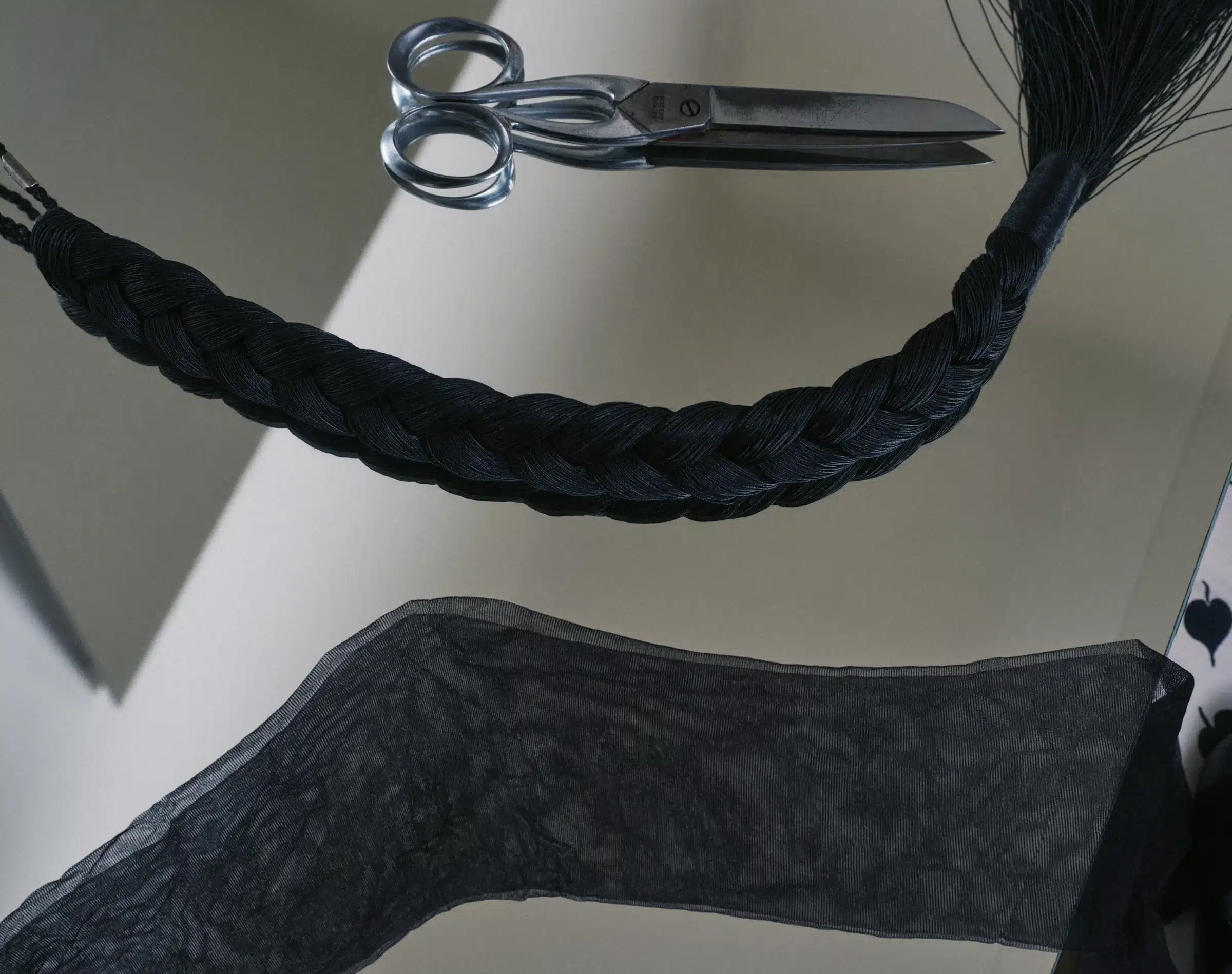
BAD HAIR DAY: French fashion brand Lemaire found itself in the crosshairs of online controversy in China following the release of its inaugural scent collection campaign, “Objets Senteur.” The brand’s recent imagery has ignited discussions about cultural sensitivity and appropriateness.
The campaign was met with backlash due to several editorial images, one of which featured a model interacting sensually with a long braid reminiscent of the Qing Dynasty. Additional images included the braided hair next to scissors and hung above a button-down shirt, raising eyebrows among viewers.
Chinese netizens were quick to critique the campaign, expressing concerns about the use of historically significant symbols. One user on Xiaohongshu labeled the editorial direction as “spooky,” sparking significant discussions across social media platforms.
As a dedicated fan of Lemaire, one commenter, known as @crossingnote, expressed disappointment over the presentation of the braid accessory, particularly the disturbing association with scissors. This sentiment was echoed by others, who raised questions about the brand’s lack of local cultural consultation in their creative processes.
At the time of writing, @crossingnote’s posts had garnered over 11,000 likes across Xiaohongshu and TikTok, illustrating how deeply audiences engage with such matters. The growing online criticism led Lemaire to disable comments on Instagram and remove related posts to curb further backlash.
Interestingly, the scent diffuser featured in the campaign—a handwoven linen object emitting notes of dry hay and amber—remains available for purchase on the brand’s official website despite the ongoing controversy. The braided imagery also draws parallels to Lemaire’s previous collection inspired by the Chinese New Year of the Horse, which had similarly drawn scrutiny, with some commenters likening it to elements from Hong Kong ghost stories.
In response to the uproar, Lemaire issued an official statement, acknowledging the feedback and the concerns raised regarding the “Tresse” item from the Objets Senteur collection. The statement conveyed their intent to explore materials and textures while expressing regret for the discomfort caused by the presentation. Lemaire emphasized their aim to uphold cultural respect and integrity in their work, though they admitted insufficient consideration was given to how the imagery might be interpreted across cultural contexts.
The brand reiterated their commitment to incorporate cultural sensitivity into their creative processes moving forward. However, the choice to communicate this apology via Instagram Stories—which are not accessible in China—sparked further criticism about the efficacy of their outreach.
This controversy emerges at a pivotal time for Lemaire, which has been working to expand its presence within the Chinese market. Recently, the brand opened its largest flagship in Shanghai, making an unconventional choice to debut at Chengdu Taikoo Li instead of more internationally recognized locations like Shanghai or Beijing. The Chengdu store has proven successful, reportedly generating remarkable monthly sales.
As fashion brands increasingly navigate complex cultural landscapes, the ongoing dialogue surrounding Lemaire’s latest campaign serves as a reminder of the importance of cultural awareness in global branding strategies.