







Decked out with a slew of family photos, awards and fragrance bottles, Estée Lauder’s original office on the 40th floor of the GM building with its sweeping views of Central Park has been preserved since her eponymous beauty company first moved into the building in 1969.
Just down the corridor, Jane Hertzmark Hudis, executive vice president and chief brand officer, is reflecting on how the founder’s original principals translate to today as the company celebrates 80 years in business.
“She had a motto — ‘telephone, telegraph, tell a woman’ that still rings very true today,” said Hertzmark Hudis. “What’s changed in 2026 is we have to add ‘tell TikTok.’ But still, “it’s the same idea — Mrs. Estée’s virality.”
That ability to build iconic brands has turned a company that started with one — Estée Lauder — into a leading global player in prestige beauty, with a portfolio of more than 20 brands, six (Estée Lauder, Jo Malone London, Tom Ford, Clinique, MAC and La Mer) that are officially members of the billion dollar-plus sales club.
(Some of those are considerably larger than $1 billion: Estée Lauder Advanced Night Repair alone, launched in 1982, is many times the size of some brands out there, noted Hertzmark Hudis.)
For Hertzmark Hudis and her team, patience is key when it comes to building brands with longevity.
“We have a powerful portfolio of brands that have stood the test of time, and what we try to do is the right things for the right reason for the long term,” said the executive. “The world has become very different, but our focus is on being long-term brand builders. Each brand is different. Each brand has its own brand equity and DNA.”
What she believes sets the company apart in this mission is its focus solely on prestige beauty. “We try to do what we do incredibly well, and be the best at what we do in what we’ve chosen to be. We’re very specific about it. We want to be the best consumer-centric prestige and luxury beauty company in the world,” said Hertzmark Hudis.
As the company undergoes a transformation led by chief executive officer Stéphane de La Faverie after a challenging few years, Hertzmark Hudis points to Leonard A. Lauder, Estée Lauder’s son who led the company for many years, as having established the blueprint for looking ahead.
“Leonard really took the long view,” she said. “He was a visionary. He had an expression: ‘If you can’t see the future, you’ll never get there.’ So we’re in the business of seeing the future. We have our business today, but we have a vision of where we’re going five to 10 years from now.”
Part of this ethos is continually modernizing and reinventing the brands in both mature and emerging markets to make sure they’re reflective of the markets they operate in, with the consumer always at the center of the equation. “Many of our brands are sold in over 100 countries around the world. Creating that cultural connection, understanding the nuances between consumers, is what propels us, because he or she is at the center of every conversation, and that’s how we keep our brands modern, relevant and moving forward,” said Hertzmark Hudis.
It’s for this reason that MAC Cosmetics’ global creative director Nicola Formichetti recently returned from India where he oversaw a bridal-themed shoot for the brand. “We’re collaborating with local talent and local photographers and creatives,” he said. “It was so special for us because we are very global, but also the local MAC felt so special. Because of that, we’re going to do one in Brazil. We’re obsessed with doing global local projects,” Formichetti continued, sitting in his SoHo office, filled with cool knickknacks, feeling a world away from the more buttoned-up headquarters uptown.

Mac
Courtesy of Mac
Since his appointment in May 2025, Formichetti has moved quickly to restore MAC on the cutting edge of culture, achieving the delicate balance of honoring the brand’s history while ensuring it’s relevant to a new generation of consumers. “This year, especially, was about looking back and honoring, with a modern take on it,” he said. “Now that we have the base, we will want to go more experimental and be really next-level.”
MAC’s performance was highlighted in its parent company’s most recent quarterly earnings, with net sales increasing, boosted by its launch in Sephora earlier this year, as well as its hero products, including the Powder Kiss Lipstick product franchise and Lip Pencil.
“MAC was never just a makeup brand, but a culture brand,” said Hertzmark Hudis. “Through Nicola and the team, they’ve thrust MAC right back into culture.” This year for example, Chappell Roan was named an ambassador and the brand also jumped on viral moments such as its speedy campaign with “The Traitors” winner Rob Rausch.
The company’s branding strategy is far from one-size-fits-all, though. For a brand like Estée Lauder, which launched in 1946, the red thread is the quality and innovation of products rather than a nostalgic look back at its history.
“Consumers today don’t always think or go back to where the product is from or when it was started,” said Hertzmark Hudis. “I have a 16-year-old relative at boarding school who thinks Double Wear is the greatest thing. They don’t think ‘oh Lauder or Mrs. Estée.’ They love great products.
“Being able to maintain products and bring them to more and more people from 16 on is pretty amazing,” she continued, of Estée Lauder Double Wear Stay-in-Place Longwear Matte Foundation, which was reformulated earlier this year. Its success, along with the concealer in the franchise, has helped to successfully turn around the brand in just a few years.
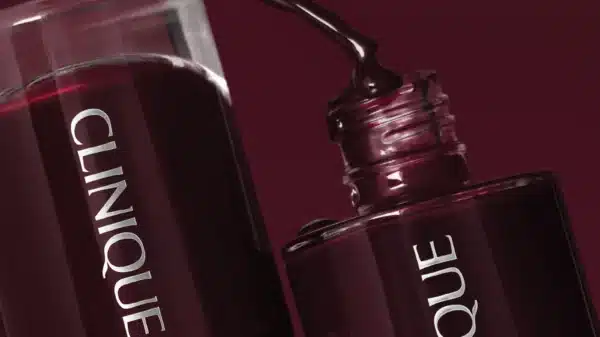
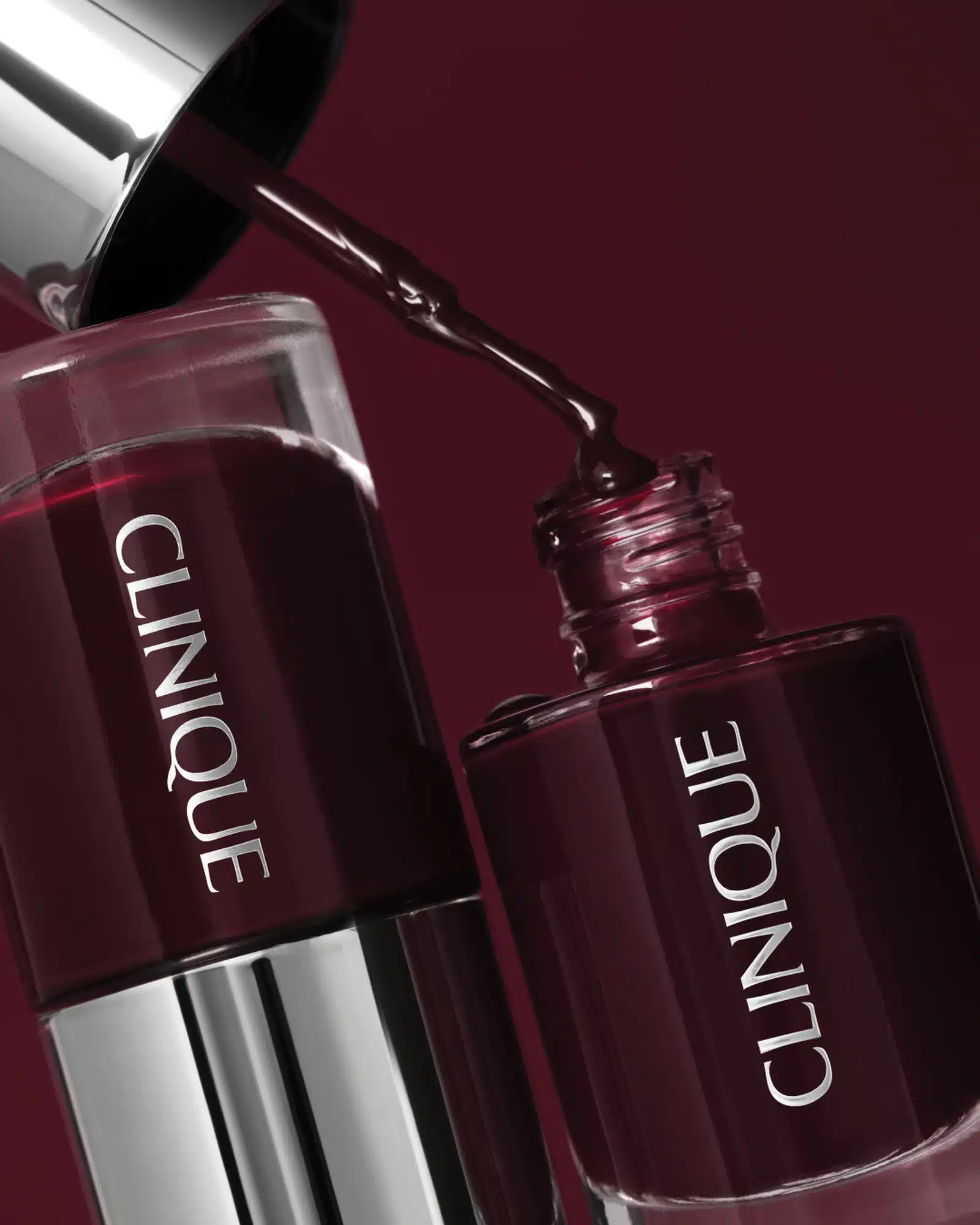
While many of Lauder’s brands are decades old, the key to their continued success is to never reach stasis. Take Clinique’s Black Honey Almost Lipstick, launched in 1971 by the brand’s founder, Carol Philips, which went viral in 2021 on TikTok. The brand leaned into that moment, expanding the franchise from lipstick to eyeliner, mascara and more.
“The world has evolved. We’ve gone from single department store counters and consultants to online to TikTok to everything,” said Hertzmark Hudis.
For Tom Ford, which just surpassed that significant $1 billion milestone, Hertzmark Hudis highlighted how the company has successfully continued its legacy after the designer stepped away. “He was the master,” she said. “What’s extraordinary about what’s happened with Tom Ford outside of the full acquisition and the ability to have all elements work together — fashion, beauty, eyewear — is the fact that that DNA has been brought through post Tom, and that’s one of the most challenging aspects of brand building.”
The same is true of Jo Malone London, the other recent entrant to the $1 billion club, that the company acquired in 1999. “We brought this brand to new consumers around the world. We’ve translated the Britishness of the brand in all the markets, and it takes on a different flavor in every market that we’re in,” said Hertzmark Hudis.

Jo Malone Ad
Courtesy of Jo Malone
For La Mer, the focus has become science, including a partnership with the Salk Institute for Biological Studies, while staying true to its origins of the marine-based “sea kelp miracle broth.” “The reality is we have more claims, more science. We have claims around derm pre- and post-procedure now. But the power of the brand has always been about Miracle Broth and it still is,” she said.
Then there are the next-gen brands, like The Ordinary (part of Deciem and said to be on the cusp of $1 billion in sales) and Le Labo, both bright spots in the company. While one is a skin care powerhouse and the other a fragrance leader, there are some similarities. Both are run almost like start-ups, with the Estée Lauder Cos. taking a fairly hands-off approach in the day-to-day operations.
“We stay true to our values. We are allowed to stay quite separate within the company, which prevents us from being put into something that is not really true to the brand,” said Jesper Rasmussen, global brand president of Deciem.
What Lauder does provide — in terms of distribution, back-end operations and much more, however, is invaluable to the company’s growth, too.
“When you get into complex markets with a lot of registrations and a lot of legal constraints, it becomes very complicated for smaller brands,” said Rasmussen, adding that without Lauder, the brand’s expansion into major markets like Brazil, India, China, Japan might never have happened.
For Le Labo, Deborah Royer, global brand president and creative director, said the brand still operates with the mindset of an indie — even a dozen years post-acquisition.
“We’ve never treated growth at Le Labo as recreating the same experience everywhere. That makes a big difference,” she said. “Growth for us is extending the same soulful artisanal world of slow perfumery to more people, not duplicating it identically wherever we go. We’re very clear on who we are, who we’ve been from Day One, what we want to offer to the rest of the world, and that is slow perfumery artisanal fragrances created with more of an artistic point of view than a marketing one, and then everything we do revolves around that.”
She described her relationship with the parent company as the best of both worlds.
“What we get from Estée Lauder is expertise in scale, expertise in working with many, many different markets. When Le Labo was acquired, it was a tiny, tiny brand,” she said, noting there were fewer than seven people on the team and distribution had not yet reached 10 countries. “These numbers exploded in a beautiful and healthy way, and we were able to expand our craft and not dilute who we are because of Estée Lauder’s expertise.

The Ordinary
Courtesy of The Ordinary
“What they’re learning from Le Labo and other brands that they acquire is how to grow and entertain the muscle of entrepreneurship and thinking differently,” she continued, “and nourishing a brand that has a set of values and how to scale it in a way that is unique and not cookie-cutter.”
Hertzmark Hudis, too, believes it’s a two-way street when it comes to learnings from each other. “Staying true to who you are is a discipline while modernizing and evolving. All brands can learn from that discipline,” she said. “At the same time, all brands can learn from some of the great things like The Ordinary. [It] has paved the road from being digitally native to the speed of innovation to the way they work. There’s a lot of great learnings there, we’re a learning organization. That’s another thing that Leonard always said.
“We are always here to learn from each other, and there’s something always to be learned.”
One brand that will receive those learnings soon is Origins, which has been placed under the management of Deciem, also parent to Niod and Avestan, to drive up its value. “What we are going to help Origins with is really the go-to market — how to bring back Origins to the front of beauty as it was,” said Rasmussen. “Origins is a good-sized brand, but not as big as the bigger brands.”
The company doesn’t necessarily have a set approach for managing heritage brands versus founder-led brands versus indie brands, which are all very different beasts. “Some brands are on a roll. Keep them going on a roll. Some brands need more work, and I spend much more time with the teams evolving a brand. And indie brands — sometimes they’re more inspirational to me than I am to them,” said Hertzmark Hudis. “They’re all different. Everybody’s different. It’s like children. You love them all, and they each need something different. So I try to also create an environment where we learn, we communicate, we teach, we grow.”