












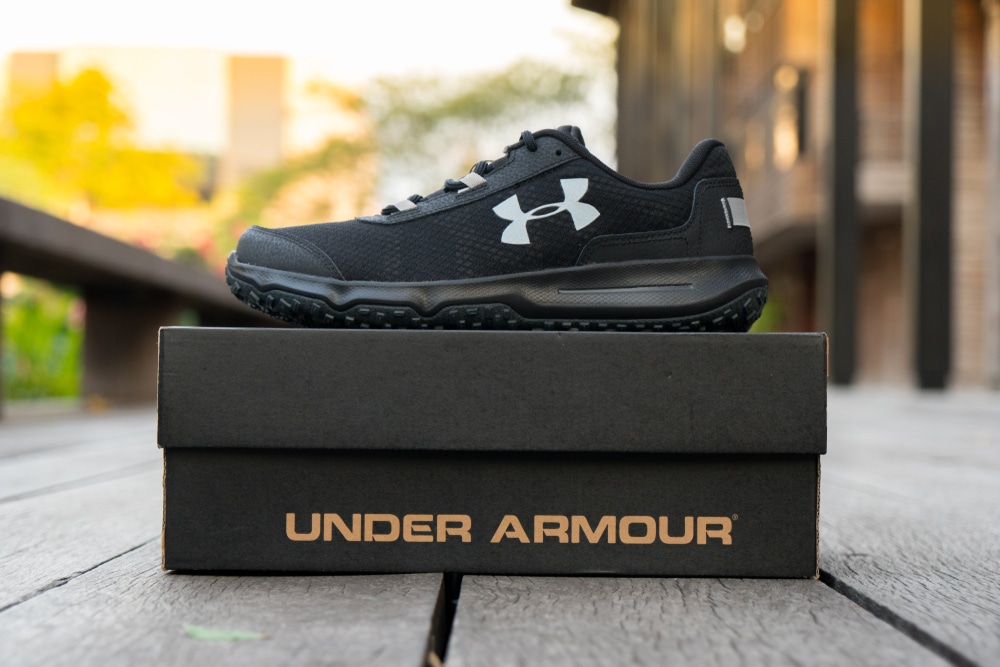
Under Armour has taken a significant step forward, raising its annual forecasts after delivering impressive third-quarter results. Following a positive performance, CEO Kevin Plank’s words signal promise and stability, causing the sportswear retailer’s shares to surge more than 13 percent in early trading.
Since resuming his role in April 2024, Plank has implemented cost-reduction strategies, simplified the product assortment, and introduced new styles in apparel and footwear, responding to both declining sales and growing market competition.
“North America is starting to show signs of recovery. We believe that the upcoming December quarter represents the lowest point of this transition,” he stated during the earnings call.
For fiscal 2026, Under Armour aims for adjusted profits per share between 10 cents and 11 cents, a substantial increase from the initial target of 3 to 5 cents.
The fall order book revealed positive trends in North America, according to executives on the earnings call. Despite soft traffic, they noted that “underlying indicators are improving.”
The company has reduced its reliance on discounts and trimmed about 25 percent of its product lines to prioritize higher-end items within categories such as training, running, and team sports.
“Raising the quality of products and adjusting prices is a gradual process. Balancing the growth of premium offerings while safeguarding immediate sales from core, lower-priced items is a delicate act,” commented Patrick Ricciardi, an analyst at Third Bridge.
Despite the optimistic forecasts, Under Armour anticipates a 4 percent drop in annual revenue, adjusting from the previous estimate of a 4 percent to 5 percent decline. Analysts predict a 4.2 percent decrease, estimating the revenue to reach $4.95 billion, according to data compiled by LSEG.
Tariff Costs Persist
Increased US tariffs on imports from manufacturing hubs like Vietnam and Indonesia are projected to add approximately $100 million to Under Armour’s expenses this fiscal year.
The gross margin is expected to contract by 190 basis points, primarily due to these tariff costs. In the last quarter, the gross margin fell by 310 basis points to 44.4 percent.
The company reported a 5 percent revenue decline, generating $1.33 billion in the third quarter, closely aligned with expectations of a 6.3 percent drop to $1.31 billion.
When excluding certain items, the company earned 9 cents per share, outperforming expectations of a 2-cent loss.